Ultimate Guide to Real-Time Audience Engagement
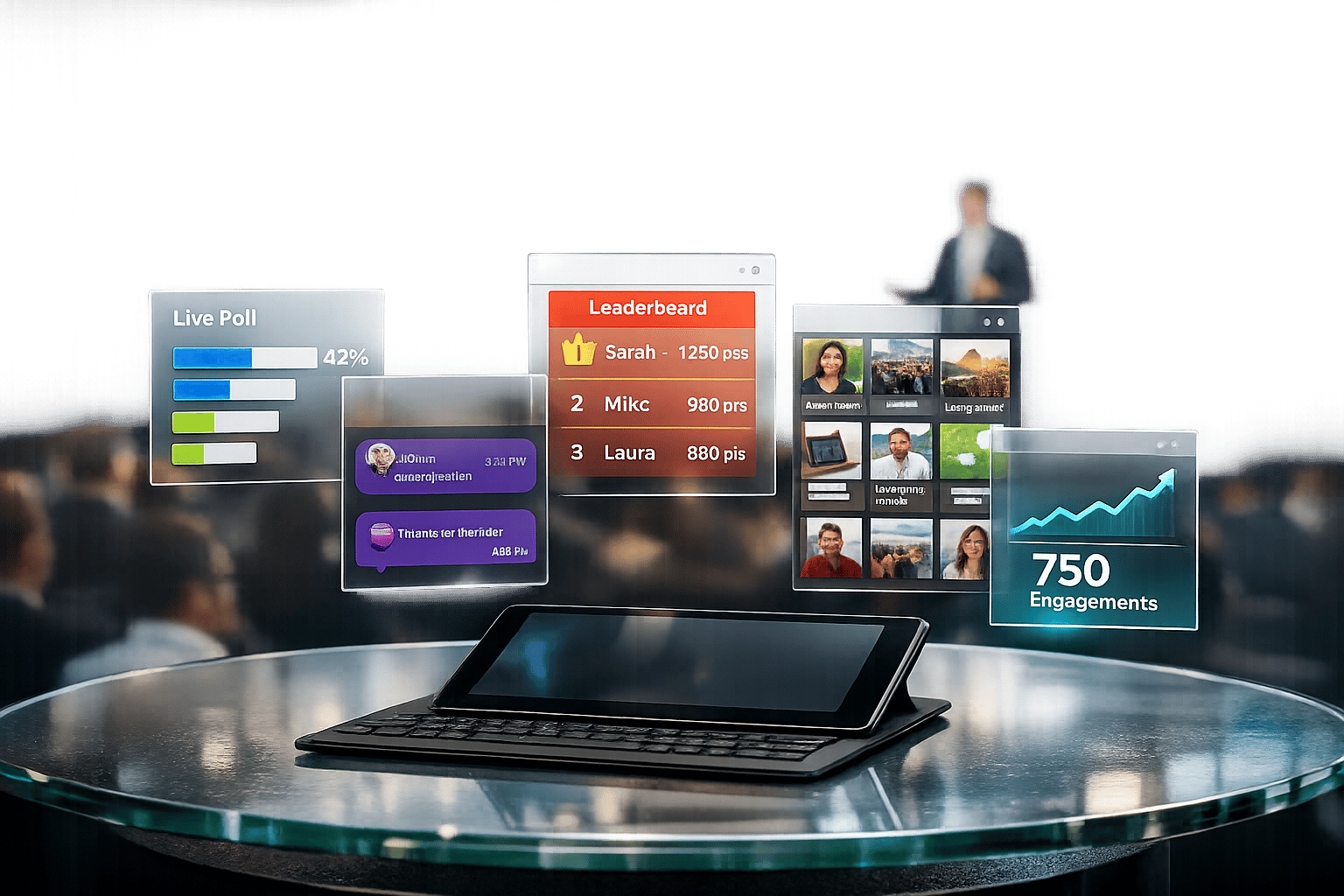
Real-time audience engagement is about interacting with your audience instantly through tools like live chats, polls, and social media. This approach helps brands connect with their audience at the moment, increasing participation, trust, and conversions. Here’s why it matters and how to do it effectively:
- Why It Matters:
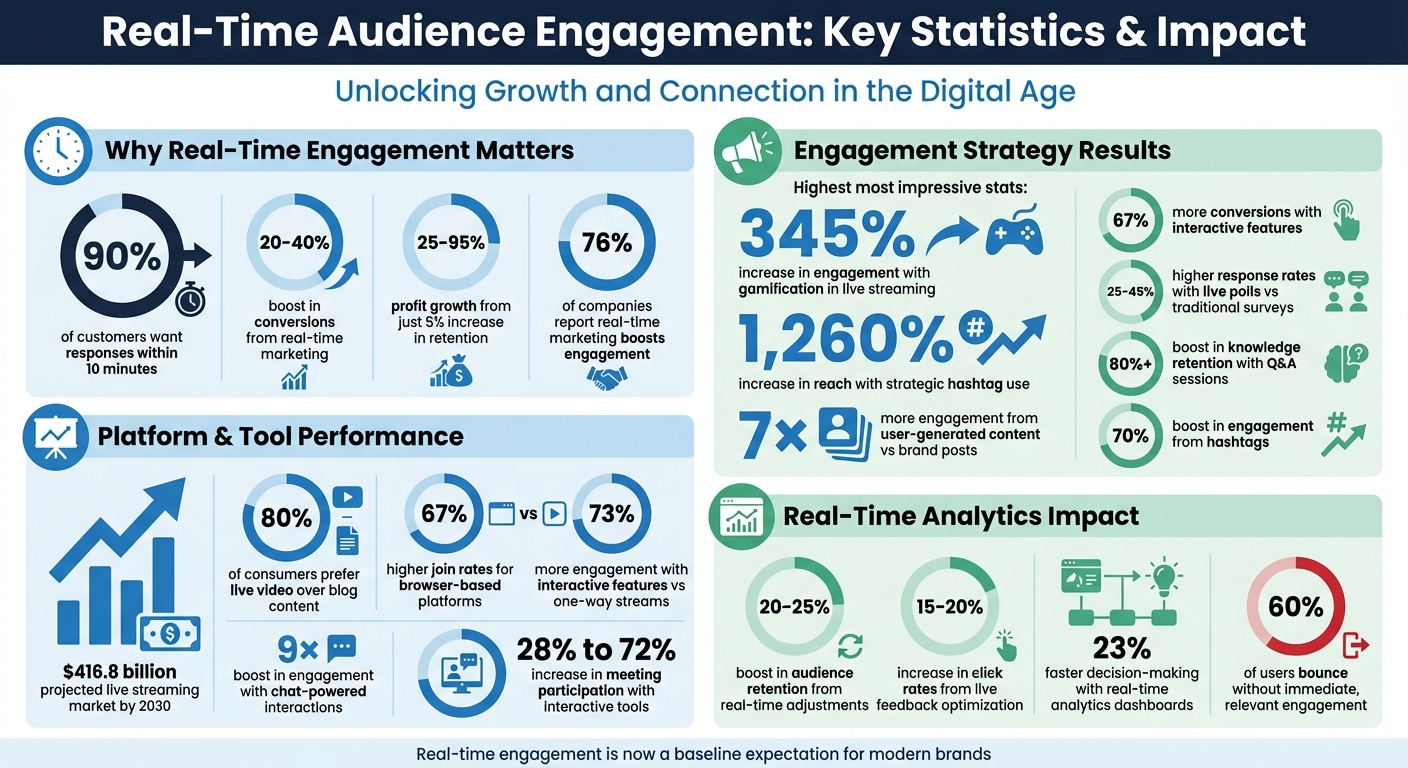
- 90% of customers want responses within 10 minutes.
- Real-time marketing can boost conversions by 20–40%.
- A 5% increase in retention can grow profits by 25–95%.
- Example: Reebok’s quick response to a political moment sold out a product in 6 hours.
- Key Strategies:
- Gamification: Use quizzes, leaderboards, and rewards to engage.
- Live Polls/Q&A: Polls can see 25–45% higher response rates.
- Social Media: Hashtags can increase reach by 1,260%.
- Best Tools:
- Social media walls for live updates.
- Live streaming platforms like StreamYard for interactive broadcasts.
- Chat tools like StreamAlive for real-time visuals and feedback.
- How to Execute:
- Plan 6–8 weeks ahead with clear goals.
- Use interactive elements every 2–3 minutes during events.
- Follow up within 24 hours with surveys and highlights.
- Metrics to Track:
- Participation rates, interaction stats, and sentiment data.
- Real-time adjustments based on analytics can boost retention by 20–25%.
Engaging in real time isn’t optional anymore – it’s what audiences expect. Brands that respond quickly and interact meaningfully build loyalty, trust, and stronger results.
Real-Time Audience Engagement Statistics and Key Metrics
Strategies for Real-Time Engagement
Transforming passive viewers into active participants takes more than just great content – it requires strategic marketing and design to drive real-time interaction. Below are some practical methods to energize your audience and keep them engaged during live events.
Gamification Techniques
Gamification is a surefire way to turn spectators into active contributors. Features like leaderboards and point systems can ignite friendly competition, while rewards such as digital badges or achievements for tasks – like attending multiple sessions or joining discussions – motivate continued participation.
Interactive elements like quizzes and trivia tailored to your brand or event theme can significantly boost engagement. Brands that incorporate these features into live streaming have reported a staggering 345% increase in engagement and 67% more conversions. Other methods, such as in-email or in-app interactions – think scratch cards, spin-the-wheel games, or built-in polls – encourage immediate action without requiring users to leave the platform. Social challenges, including hashtag contests or real-time photo competitions, also foster community-driven content. To keep the energy high, aim to include at least one interactive element – like a poll or quiz – every 2–3 minutes.
Beyond competition, tools for direct feedback can further encourage immediate interaction and create a more engaging experience.
Live Polls and Q&A Sessions
Live polls and Q&A sessions offer a direct way to connect with your audience and gather their input. Polls can be used strategically throughout a session – at the start to set the tone, in the middle to check understanding, and at the end to collect feedback. Real-time polls often see 25%–45% higher response rates compared to traditional surveys, and mobile-optimized versions can achieve completion rates above 50% among younger audiences.
Q&A sessions are another game-changer, boosting knowledge retention by over 80% and doubling audience participation. To maximize engagement, use concise, clear questions and allow responses directly through the platform’s chat. Upvoting systems can help highlight the most relevant questions, while short response windows create urgency. Displaying real-time results with dynamic visuals like bar charts or word clouds provides instant feedback, keeping participants invested.
Having a dedicated moderator to manage the Q&A ensures quality interactions by filtering out irrelevant distractions. This is crucial, as studies show that people may forget up to 90% of content they don’t actively engage with within a week.
While gamification and Q&A sessions are effective, social media tools can expand real-time engagement beyond your event’s platform.
Social Media and Hashtags
Social media is a powerful tool for scaling real-time engagement. Strategic use of hashtags can dramatically increase your reach – up to 1,260% – and boost engagement by 70%. Each platform has its own best practices: on Instagram, the 30-30-30-10 rule works well (30% popular, 30% medium, 30% niche, and 10% branded hashtags). On Twitter, stick to 1–2 trending hashtags, while LinkedIn performs best with 3–5 professional tags. TikTok thrives with 3–5 hashtags tied to viral trends.
User-generated content is another key driver, generating nearly 7× more engagement than brand-created posts. A standout example is the #SwitchTheChobaniFlip campaign on TikTok, which racked up over 1.7 billion views. Inviting your audience to co-create content brings them into your brand’s story.
But engagement isn’t just about posting – it’s about participating. Actively join conversations in comment threads and relevant communities to create more touchpoints. Posts that pose questions can receive up to 100% more comments than simple statements.
"Time is the scarcest resource, and every post needs to give people a reason to spend theirs on you."
– Amanda Vance, Senior Content Strategist, Intuit Mailchimp
Quick responses are also critical. Aim to reply to direct messages within an hour and comments within 2–4 hours during business hours. For example, U-Haul streamlined its social media management by consolidating interactions into one inbox, cutting first response times to under 10 minutes and resolving most inquiries in under 30 minutes. Lastly, applying the 80/20 rule – dedicating 80% of your content to education or entertainment and 20% to promotion – can foster meaningful engagement, as platforms increasingly reward quality interactions and dwell time.
Tools and Platforms for Real-Time Engagement
Real-time engagement thrives on the right technology. With the live streaming market expected to hit $416.8 billion by 2030 and 80% of consumers favoring live video over blog content, choosing the right tools has never been more important.
Social Media Walls
Social media walls pull user-generated content from platforms like X (formerly Twitter), Instagram, LinkedIn, and TikTok into a live-updating display. These tools actively involve attendees by showcasing their posts on event screens, websites, or digital signage as they happen.
Take Insperity, for example. During their Fall 2025 Kickoff, they connected 4,500 employees across 18 locations by displaying over 800 posts in a single real-time feed on their intranet and event screens. Similarly, the Oklahoma City Thunder used a social wall on their Jumbotron during the 2025/2026 season, allowing fans to post photos directly to arena screens via QR codes.
Modern social walls feature AI moderation, QR-driven direct posting, and lightning-fast refresh rates. Delays, even minor ones, can derail engagement.
"The motivation to participate drops off fast when people can’t see their content reflected instantly." – Juicer.io
For large events, pairing AI filtering with manual approval every 30–60 seconds ensures brand safety while maintaining the immediacy that keeps participants engaged. Events using these tools have seen social media engagement rise by up to 4.5×.
This kind of dynamic content aggregation pairs perfectly with live video platforms for an even richer experience.
Live Streaming Platforms
Platforms like StreamYard and LiveReacting allow brands to host professional live broadcasts with built-in interactive features. StreamYard is ideal for polished interviews and webinars, offering branded overlays and on-screen comment displays. LiveReacting, on the other hand, focuses on gamification with quizzes, trivia, and automated 24/7 broadcasts.
Both platforms support simultaneous streaming to Facebook, YouTube, and Twitch, broadening your audience without extra effort. Browser-based platforms also see 67% higher join rates, while interactive features boost engagement by 73% compared to traditional one-way streams.
"The most amazing thing about this software is that you can update your stream on the fly… all the interactive features such as countdowns, polls, and trivia boost engagement." – Geoffrey E., Chief Content Officer, Marketing Agency
For the best results, look for platforms with low-latency technology and customizable branding. With 68% of live interaction sessions now happening on mobile devices, mobile-friendly tools are a must.
These live streaming capabilities naturally complement interactive chat tools that deepen audience engagement.
Chatbots and Interactive Solutions
Chat-powered tools like StreamAlive take audience interaction to the next level by turning chat messages into live visuals – think word clouds, location maps, and automated polls – all without requiring users to leave the platform. StreamAlive works seamlessly with Zoom, Google Meet, and Microsoft Teams to create these interactive elements from native chat responses.
Keeping everything on-screen makes participation easy and frictionless. According to StreamAlive, their chat-powered interactions can boost audience engagement by up to 9×.
For corporate meetings and training, platforms like Slido and MeetingPulse offer features like anonymous Q&A, live polling, and sentiment analysis. These tools can increase meeting participation from 28% to 72%, with 97% of participants reporting improved learning outcomes when interactive tools are used.
"We use Slido during our weekly all-hands meetings to make sure that every team member gets a voice, no matter where they are or what they want to discuss." – Wade Foster, Co-Founder & CEO, Zapier
For on-site events, using a mobile hotspot and a dedicated laptop ensures smooth interactions. Combining easy participation methods (like QR codes and native chat) with real-time visual feedback creates a positive feedback loop that keeps audiences engaged from start to finish.
How to Implement Real-Time Engagement Tactics
Real-time engagement isn’t something you can just wing – it takes careful planning, active execution, and thoughtful follow-up. Breaking it into three phases – before, during, and after – helps ensure you’re covering all the bases.
Pre-Event Preparation
Start planning your event about 6–8 weeks ahead, and set a clear, measurable goal, like increasing attendance by 20%. Dive into your audience’s needs using data from support tickets, FAQs, and community feedback to tailor your content. Create a unique event hashtag and use it consistently across all platforms. Build a content calendar that balances key webinars, recurring series, and spontaneous pop-up sessions to keep your audience engaged.
For tech prep, make sure you have a wired internet connection with at least 10 Mbps upload speed, plus a backup like a 5G hotspot with 5 GB of data. Set up interactive tools like Slido, Kahoot!, or Zigpoll, and integrate them with your CRM to track engagement in real time.
"Audio quality impacts viewer retention more than video resolution. Prioritize a decent mic before a fancy camera." – SocialRails
Assign roles to your team: a chat moderator, a social media manager for live updates, and a technical lead to handle any hiccups. Provide speakers and sponsors with social media kits that include graphics, pre-written captions, and hashtags to help them promote the event. Finally, run a private 15-minute test stream one or two weeks beforehand to ensure everything runs smoothly. This groundwork sets the stage for a highly interactive and engaging event.
Engagement During the Event
Once the event kicks off, focus on creating meaningful interactions with your audience. Move beyond passive viewing by using live polls and Q&A sessions to give attendees a voice in shaping the event. Keep the energy up by introducing something interactive every 2–3 minutes.
Showcase a real-time social media wall featuring attendee posts – this creates a feedback loop that rewards participation and encourages even more interaction. Add shareable moments with eye-catching stage designs, surprise guests, or fun interactive elements that inspire attendees to create their own content. Monitor live dashboards closely to adjust as needed: send push notifications if attendance dips or extend sessions if engagement is high. These real-time tweaks ensure your audience feels seen and valued. And don’t underestimate the power of user-generated content – it’s trusted nearly ten times more than polished brand ads.
Post-Event Analysis and Follow-Up
Once the event wraps up, following up quickly is key to keeping the momentum alive. Send out post-event surveys within 24 hours to capture feedback while the experience is still fresh. On the same day, share a thank-you message along with a highlight reel and some quick stats (like 500+ attendees or 12 speakers).
Within a week, send out session recordings, a recap blog post, and a photo gallery. Share survey results and announce your next event while the buzz is still strong.
Dive into the data to analyze engagement: look at participation metrics (like check-ins), interaction stats (polls and Q&A), and content performance (session retention). Sync these insights into your CRM so sales teams can act quickly, and hold an internal debrief within two weeks to review how you performed against your goals and refine your approach for next time. These steps not only measure success but also help build long-term loyalty with your audience.
For example, an NBA team used Talkwalker by Hootsuite during the 2024–2025 season to analyze fan engagement. They found that fans loved original, behind-the-scenes content and interactive features far more than recycled clips. By shifting to 50–80% original posts, the team saw a 352% jump in video views, a 46% boost in impressions, and a 27% increase in engagement – all while posting less frequently.
Measuring and Improving Real-Time Engagement
Metrics to Track
Tracking the right metrics takes out the guesswork. Participation metrics – like check-ins, session scans, and dwell time – help you see who’s showing up (physically or digitally) and how long they’re staying engaged. Then there are interaction metrics, such as poll responses, Q&A activity, chat messages, and emoji reactions, which provide a snapshot of how actively your audience is participating and how energized they are in the moment.
Don’t forget about content performance metrics. By analyzing session retention curves, you can figure out exactly where you’re losing your audience’s attention and what’s keeping them engaged. Conversion metrics like click-through rates, lead scans, and real-time signups also offer insights into how well your content is driving action. Additionally, sentiment data – powered by AI tools – can evaluate live comments to gauge whether audience reactions are positive, neutral, or negative. For events focused on networking, track metrics like meetings scheduled, messages exchanged, and lead quality scores to measure how well connections are being built.
"You cannot improve what you are not tracking, and you cannot capitalize on momentum you do not see." – Accelevents
Here’s why it matters: 76% of companies report that real-time marketing strategies boost audience engagement, and organizations using real-time analytics dashboards make decisions 23% faster than those relying on traditional methods. On the flip side, if engagement doesn’t feel immediate or relevant, 60% of users will bounce from your digital experience.
With these metrics in hand, the next step is using real-time data to make quick, impactful adjustments.
Using Real-Time Analytics for Improvement
Once you’ve identified the key metrics, the real value lies in acting on them. Real-time data allows for immediate course corrections. For example, set up alerts for low engagement – like dwell times under 10 seconds – and respond instantly with actions like launching a live poll or sending a push notification. If attention wanes during a video or lecture, pivot to something interactive, like a live Q&A, to recapture interest.
Keep your analytics dashboards streamlined. Focus on 5–10 key metrics to avoid overwhelming your team and make decision-making faster. Use color-coded visuals – red for issues, green for goals met – to quickly assess the situation at a glance. These real-time adjustments can make a big difference: they can boost audience retention by 20% to 25%, and tweaking elements like pop-ups or calls-to-action based on live feedback can increase click rates by 15% to 20%.
To maximize impact, integrate your real-time engagement data into your CRM. This way, sales teams can follow up with high-potential leads while the event is still happening.
Conclusion
Real-time audience engagement isn’t just a "nice-to-have" anymore – it’s what customers expect from modern brands. People no longer have the patience for delays, and the brands that respond the fastest are often the ones that win their loyalty. Shifting from reactive to proactive approaches means you’re not waiting for someone to abandon their cart; you’re stepping in as soon as their behavior suggests hesitation.
The data tells the story: 76% of companies report that real-time marketing drives stronger audience engagement. Brands that regularly stream live video see an impressive 345% increase in engagement and a 67% boost in conversions. By addressing friction at the exact moment uncertainty creeps in – whether through AI chatbots, live polls, or predictive messaging – you not only speed up decision-making but also build trust.
"Real-time engagement isn’t merely a feature; it’s becoming a baseline expectation for modern digital experiences." – Hushly
The numbers make it clear: reducing friction in real time fosters trust and drives conversions. To make this happen, start by centralizing communication across platforms. Set up behavioral triggers for key moments, such as when users show exit intent or repeatedly visit pricing pages. Keep an eye on metrics like participation rates, sentiment data, and conversion signals. Let AI handle routine questions so your team can focus on more complex, high-impact interactions.
Put these strategies into action now and stay tuned in to what your audience needs – right when they need it.
FAQs
What’s the fastest way to start real-time engagement with a small team?
To kick off real-time engagement with a small team, lean on tools you already have and focus on channels that encourage interaction. Platforms like live chat, social media, or messaging apps allow your team to respond instantly to audience interactions. Make it a priority to create and schedule content for the platforms your audience frequents most, while ensuring your team is prepared to quickly address comments, questions, or reactions as they come in.
How do I choose the right live tools for my event goals?
When planning your event, begin by clearly defining its specific goals. Are you aiming for real-time interaction, feedback collection, or perhaps both? Once you know what you need, focus on finding tools designed to support these objectives – think audience engagement platforms or attendee tracking solutions.
Make sure the tools you choose align with your event format, whether it’s virtual, hybrid, or in-person. Compatibility with your existing platforms is equally important to streamline operations. Lastly, evaluate each tool’s features, ease of use, and pricing to ensure they match your event’s scale and budget.
Which 5–10 engagement metrics should I track first?
Tracking the right engagement metrics is crucial to understanding how your audience interacts with your content. Start by looking at time spent engaging – this tells you whether your content holds their attention. Then, keep an eye on likes, comments, and shares to gauge how much your audience connects with and values your posts. Click-through rates are another key indicator, showing how effectively your content drives action.
For a deeper dive, monitor repeat visits to see if people are coming back for more, and track conversion actions like sign-ups or downloads to measure how well your content supports your goals. Don’t overlook mentions or sentiment analysis either; these can reveal how your brand is perceived and discussed. Together, these metrics create a clear picture to refine and improve your engagement strategy.